DISCLAIMER: This product is strictly for research use only. It is meant solely for laboratory testing and in vitro studies-not for use in or on humans or animals. All details provided on this site are for educational purposes. This item is not intended to be used as a drug, supplement, or cosmetic, and must not be misrepresented as such.
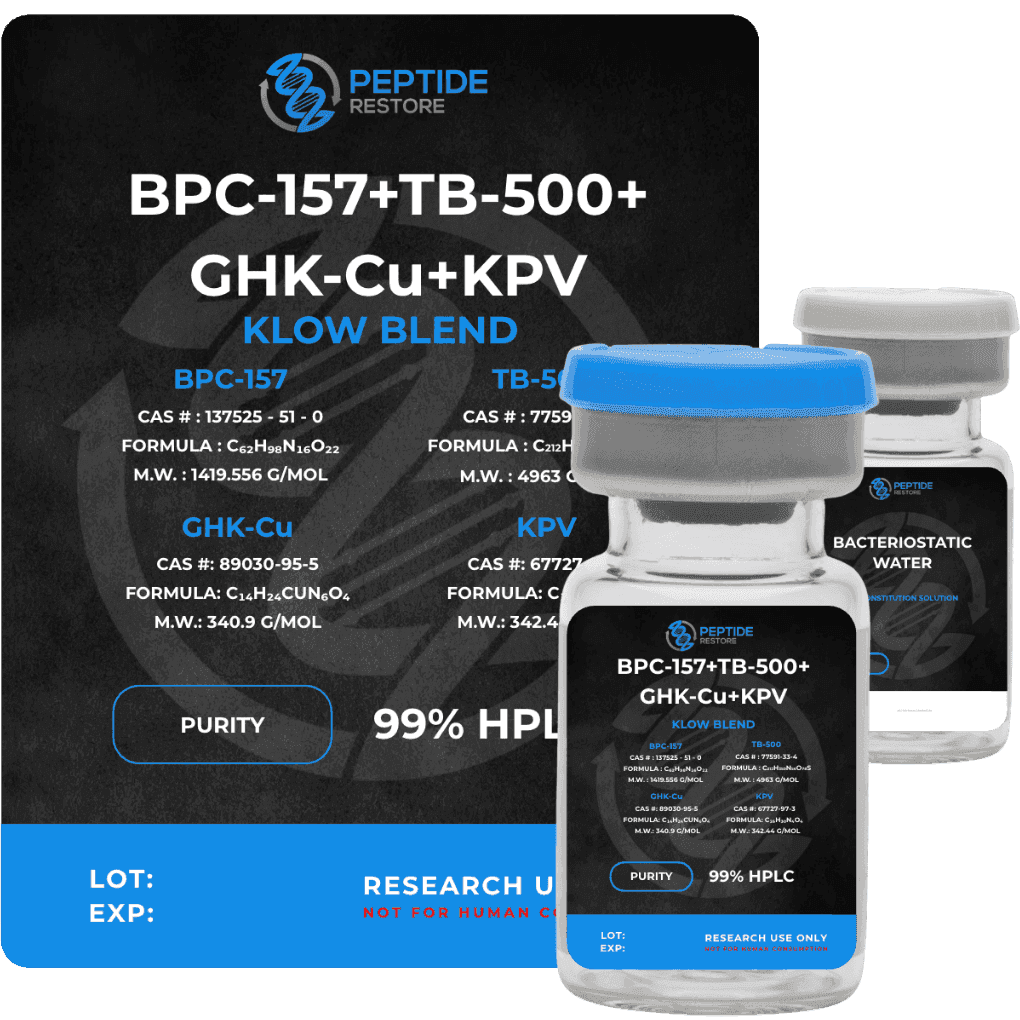
BPC-157 + TB-500 + KPV + GHK-Cu (Klow Blend), 10/10/10/40mg, 10/10/10/40mg
The KLOW Blend is a comprehensive recovery-focused peptide formulation designed to target inflammation, accelerate tissue repair, and promote cellular regeneration.
Quantity: 1
All peptides arrive in powdered form for stability.
Third-Party Verified Purity
Each batch is tested and certified to meet or exceed 99% purity standards.

Made in the USA
Produced in United States WHO/GMP and ISO 9001:2015 certified facilities.

Rigorous Quality Control
Double-tested to ensure the highest quality for the most effective research.
What is BPC-157 + TB-500 + KPV + GHK-Cu (Klow Blend), 10/10/10/40mg?
The KLOW Blend is a multi-peptide formulation designed to support comprehensive recovery, inflammation control, and tissue regeneration. It combines BPC-157, a synthetic peptide derived from a protein in gastric juice that’s studied for its ability to promote healing in muscles, tendons, ligaments, joints, and the gastrointestinal lining; TB-500, a thymosin beta-4 fragment known for enhancing cell migration, blood vessel growth, and tissue repair; KPV, a tripeptide with strong anti-inflammatory properties explored for its effects on cytokine regulation and immune balance; and GHK-Cu, a naturally occurring copper-binding peptide researched for its role in skin regeneration, wound healing, collagen synthesis, and antioxidant activity. Together, these peptides form a synergistic blend that targets multiple biological pathways involved in soft tissue healing, immune modulation, and cellular repair.
Potential Benefits Shown in Studies
Possible benefits of the KLOW blend:
- Accelerated healing of soft tissue, including muscles, tendons, ligaments, and skin
- Reduced systemic and localized inflammation through immune-modulating pathways
- Enhanced angiogenesis to improve blood flow and nutrient delivery to damaged tissues
- Improved tissue regeneration and remodeling with support for scar minimization
- Gut barrier protection and anti-inflammatory effects in gastrointestinal tissues
- Increased collagen synthesis and skin repair via copper peptide signaling
- Support for nerve regeneration and protection against oxidative stress
- Synergistic multi-pathway recovery—targeting inflammation, repair, and remodeling concurrently
Mechanisms of Action
BPC-157
- Upregulates growth factors like VEGF and FGF for tissue repair
- Enhances fibroblast activity and tendon fibrocyte migration
- Stabilizes nitric oxide pathways and protects endothelium
- Promotes angiogenesis and collagen formation at injury sites
TB-500
- Binds G-actin to regulate cytoskeleton dynamics and cell movement
- Stimulates angiogenesis via VEGF modulation
- Promotes wound healing by activating regenerative gene expression
- Enhances satellite cell recruitment in muscle repair
KPV
- Modulates inflammatory cytokines by downregulating NF-κB activity
- Acts on melanocortin 1 receptor (MC1R) to suppress local inflammation
- Reduces intestinal and skin inflammation in preclinical models
- Inhibits pro-inflammatory mediators like TNF-α and IL-6
GHK-Cu
- Activates genes related to tissue remodeling, wound healing, and antioxidant defense
- Increases synthesis of collagen, elastin, and glycosaminoglycans
- Promotes angiogenesis and blood vessel repair via copper ion transport
- Protects against oxidative stress and supports DNA repair enzymes
Molecular Structure of Blend Components
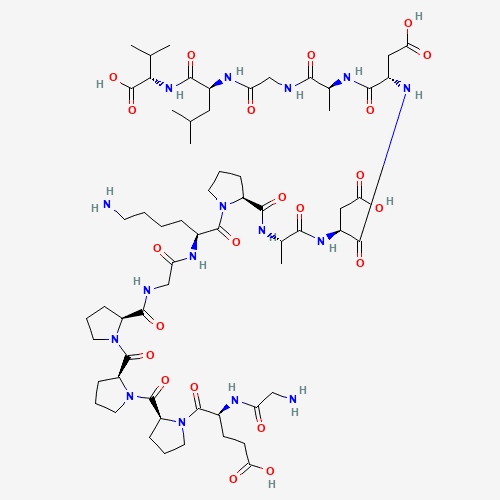
BPC-157 Sequence
Gly-Glu-Pro-Pro-Pro-Gly-Lys-Pro-Ala-Asp-Asp-Ala-Gly-Leu-Val
Molecular Properties
Certificate of Analysis
Lot: 251223KLO01
BPC-157 + TB-500 + KPV + GHK-Cu (Klow Blend), 10/10/10/40mg Research Highlights
Preclinical studies show BPC‑157 markedly enhances repair of tendons, ligaments, muscles, nerves, bones, and vascular tissues in animal models by promoting angiogenesis, collagen synthesis, and fibroblast activity.
Source: springer
BPC‑157 appears to act through multiple pathways including VEGF, nitric oxide signaling, and ERK1/2, leading to improved angiogenesis, reduced oxidative stress, neuromuscular stability, and protection against neurotransmitter imbalances in rodents.
Source: springer
Rodent models demonstrate that BPC‑157 accelerates healing of Achilles tendon and MCL injuries through aligned collagen fiber formation, increased fibroblast proliferation, and improved structural integrity.
Source: drdavidgeier